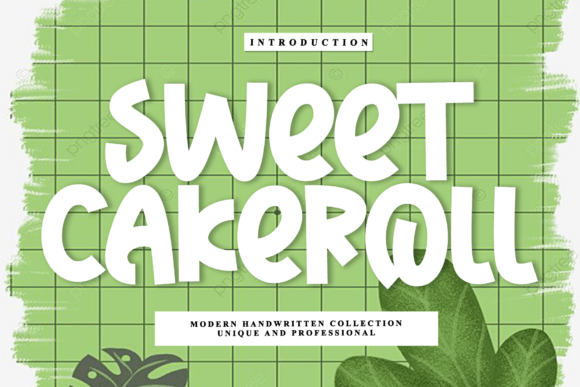
Sweet Cakeroll: A Script for Artisan Branding
When you are building a visual identity, the choice of typography is often more critical than the imagery itself. For brands that need to convey warmth, sophistication, and a handmade quality, Sweet Cakeroll offers a distinct solution. It is not just another script font; it is a sophisticated, rhythmic typeface that bridges the gap between traditional calligraphy and modern organic design. If you are looking for a premium font that feels customized without the cost of bespoke lettering, understanding the nuances of this typeface is your first step.
The Anatomy of Artisanal Flow
The defining characteristic of Sweet Cakeroll lies in its sweeping, looping ascenders. In typography, ascenders are the parts of lowercase letters like h, k, and b that extend above the x-height. In this font, those extensions are exaggerated and fluid. They create a visual rhythm that mimics the natural movement of a hand holding a pen, but with a consistency that ensures legibility. This balance is difficult to achieve. Many handwritten font options feel either too rigid (looking like a digital simulation) or too chaotic (making them impossible to read). Sweet Cakeroll sits right in the center, offering a warm, organic aesthetic that feels personal and approachable.
This style is categorized as a script font, but it carries a level of elegance often reserved for high-end display font selections. It avoids the scratchy, distressed look of grunge fonts, opting instead for smooth curves and a consistent weight. This makes it incredibly versatile for projects that require a touch of class. Whether you are designing a logo for a boutique or crafting social media graphics for a lifestyle influencer, the font injects immediate personality into the layout.
Strategic Applications: Where Sweet Cakeroll Shines
Choosing a font is about context. You wouldn't use a whimsical script for a corporate law firm, just as you wouldn't use a sterile sans-serif for a children’s birthday party. Sweet Cakeroll is specifically engineered for industries where brand identity relies on trust, quality, and a personal touch.
Artisanal Food and Beverage Branding
The name itself suggests confectionery, and it performs exceptionally well in the food sector. If you are designing packaging design for a small-batch jam, a bakery, or a specialty coffee roaster, this font communicates "homemade" and "premium" instantly. It pairs beautifully with photography of textured ingredients. Because it is a creative font, it helps a product stand out on a crowded shelf by suggesting that there is a real person behind the brand, not just a factory.
Boutique Lifestyle and Fashion
For upscale lifestyle marketing, such as wedding invitations, salon menus, or boutique clothing tags, Sweet Cakeroll provides the necessary elegance. It works exceptionally well in editorial design, particularly for magazine headers or blog titles where you want to draw the reader in with a sense of intimacy. It serves as a counterpoint to clean, geometric layouts, adding a necessary human element to digital and print interfaces.
Digital Presence and Web Design
In the realm of web design, Sweet Cakeroll should be used sparingly but strategically. It is an excellent choice for hero section headlines, pull quotes, or call-to-action buttons. Using it for body text would be a mistake—script fonts generally struggle with readability in long paragraphs. However, as a display font, it captures attention immediately when a user lands on a page. It pairs exceptionally well with a clean serif font or a geometric sans serif font, creating a modern hierarchy that guides the eye.
Mastering the Pairing and Hierarchy
One of the most common questions designers have regarding modern typography is how to pair fonts. Sweet Cakeroll is a "loud" font in the sense that it has a strong personality. Therefore, it requires a partner that is willing to play a supporting role.
When creating a font pairing, look for a typeface that is neutral and structured. A sans-serif like Montserrat or a classic serif like Garamond can provide the stability needed to let the script breathe. For example, if you are creating a menu design, use Sweet Cakeroll for the section headers (e.g., "Appetizers," "Desserts") and a clean sans-serif for the dish descriptions and prices. This creates a clear visual hierarchy, ensuring that the customer knows exactly where to look without feeling overwhelmed by the ornate lettering.
Consider the readability considerations of your specific project. In packaging design, the text might be viewed from a distance or while the product is moving. In this case, ensure the loops of the ascenders do not interfere with the legibility of the letters below them. Sweet Cakeroll handles this well due to its generous spacing, but it is always best practice to print a physical proof before finalizing a production run.
Evaluating Fit and Technical Practicalities
Before integrating any design assets into your workflow, you must evaluate the technical fit. Sweet Cakeroll is a commercial font, meaning you need to ensure you have the correct licensing for your specific use case—whether that is a single client project, a merchandise line, or a digital app.
When you install the font, explore the full character set. High-quality premium font files often include stylistic alternates, swashes, and ligatures. These are variations of standard letters that can be swapped in to create a more authentic handwritten look. For instance, you might use an alternate capital "S" with a longer tail to emphasize a specific word in a logo. Accessing these features usually requires software like Adobe Illustrator or Photoshop, where you can utilize the Glyphs panel.
Finally, consider the medium. If you are using Sweet Cakeroll for web design, ensure the font file is optimized for web use (WOFF2 format) to maintain fast page load speeds. If you are using it for print, ensure your printer supports the font embedding or that you have outlined the text in your vector files.
Building a Brand with Rhythm
Ultimately, Sweet Cakeroll is more than just a collection of vector points; it is a tool for storytelling. It allows small business owners, marketers, and designers to inject a sense of rhythm and warmth into their projects. It tells the audience that a brand values aesthetics, pays attention to detail, and embraces a personalized approach.
Whether you are revamping a brand identity for a local patisserie or designing social media graphics for a lifestyle coach, this font provides the versatility and sophistication required to stand out. By understanding its visual weight, pairing it effectively, and applying it to the right contexts, you can leverage Sweet Cakeroll to create designs that are not only beautiful but also strategically effective. It is a reminder that in a digital world, a touch of the human hand can make all the difference.