Hello Someday: The Script Font for Artisan Brands
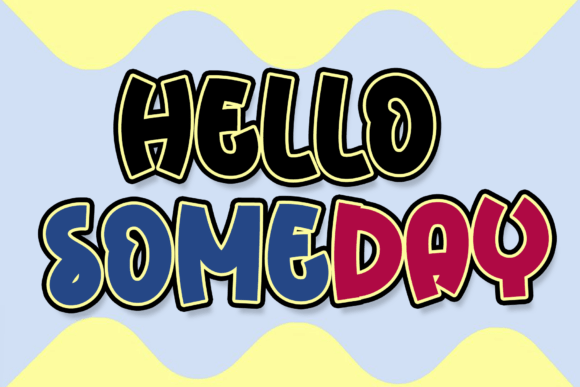
In the crowded world of digital design, finding a typeface that feels both personal and professional can be a challenge. You need something that captures attention without sacrificing clarity, something that conveys craftsmanship without looking amateur. Enter Hello Someday, a sophisticated script font that strikes a remarkable balance between rhythmic, calligraphic flow and a warm, organic aesthetic. It’s more than just a collection of letters; it’s a design asset built for brands that want to tell a story of quality and care.
The defining characteristic of Hello Someday lies in its sweeping, looping ascenders. These are the parts of letters like 'h', 'l', and 'b' that extend above the midline. In this typeface, they are not merely functional; they are expressive, creating a sense of customized, artisanal artistry with every word. This flowing energy makes it an ideal choice for projects where a human touch is paramount. From artisanal food branding and boutique product packaging to upscale lifestyle marketing and creative editorial titles, Hello Someday brings a distinct personality that elevates the entire visual narrative.
Where Artisan Craft Meets Modern Design
Understanding a font’s personality is key to using it effectively. Hello Someday is not a formal, rigid script. Instead, it carries a friendly yet upscale vibe. It feels like something handwritten by a skilled calligrapher, full of intention and rhythm. This makes it a premier choice for businesses and creators in specific niches. Think of a small-batch coffee roaster needing a logo that feels as authentic as their beans, or a boutique wedding planner whose brand identity requires elegance without being stuffy. The font’s character shines in these contexts.
Its applications are broad yet focused on quality. Consider these real-world uses:
- Logo Design: For bakeries, florists, craft studios, and boutique consultancies, Hello Someday creates a memorable and approachable wordmark.
- Packaging Design: On labels for homemade jams, artisanal chocolates, or premium skincare, it communicates a product made with passion.
- Editorial Titles: In magazines, blogs, or book covers for lifestyle, cooking, or personal development topics, it draws the reader in with its creative flair.
- Social Media Graphics: For quotes, announcements, and branded content on platforms like Instagram, it adds a layer of visual warmth that stops the scroll.
- Web Design: Used sparingly for headlines or pull quotes on a website, it can guide the eye and reinforce a brand’s unique voice.
The font’s strength lies in its ability to act as a display font. It’s designed to be the star of the show in headlines and short phrases. Using it for long paragraphs of body copy would hinder readability, but when paired thoughtfully with a clean serif font or a simple sans serif font, it creates a dynamic and engaging visual hierarchy. This kind of font pairing is a fundamental skill in modern typography, and Hello Someday is a fantastic starting point for building a sophisticated typographic system.
Practical Guidance for Implementation
Choosing the right creative font is only half the battle. Knowing how to use it is what separates good design from great design. Here’s how to approach integrating Hello Someday into your projects with confidence.
Evaluating Project Fit
Before you commit, ask yourself: does the tone of this project align with the font’s personality? Hello Someday excels in scenarios calling for warmth, creativity, and a personal touch. It would be a mismatch for a corporate law firm’s annual report or a technical manual. Its strength is in evoking emotion and connection, making it perfect for brands targeting an audience that values authenticity and craftsmanship. If your goal is to build a brand identity around these values, it’s a strong contender.
Testing and Readability
Always test the font in context. Set your actual headlines or logo text. Check how the letters connect, especially in tricky letter combinations. Look at the spacing (tracking and kerning) to ensure it feels balanced. Because it is a script font, pay close attention to legibility at smaller sizes, particularly on screen. A common practice is to use it for large, impactful headings and pair it with a highly readable typeface for supporting text.
Understanding Your License
If you plan to use Hello Someday for commercial work—which includes client projects, products for sale, or monetized content—you must ensure you have the correct commercial font license. A premium font like this comes with specific terms. Read the licensing agreement carefully. Does it cover the number of users, the types of projects (print, web, app), and the volume of end products? Using a font without the proper license is a legal risk for any business or professional.
Exploring Included Styles
Many quality fonts come with more than just the basic alphabet. Check if Hello Someday includes alternate characters, ligatures (special connected letter pairs), or stylistic sets. These extras are invaluable. They allow you to customize the look further, ensuring your final design feels unique and not like a generic template. Accessing these features is often as simple as toggling an option in your design software’s OpenType panel.
Ultimately, the goal of any typeface is to serve the message. Hello Someday is a powerful tool for adding personality and artistry to a brand. It influences perception by signaling care, creativity, and a human-centric approach. When used thoughtfully, it doesn’t just display words; it enhances the story you’re trying to tell, making your logo design, packaging, or web design resonate on a deeper level. It’s a valuable addition to any designer’s toolkit for projects that demand a touch of handcrafted elegance.